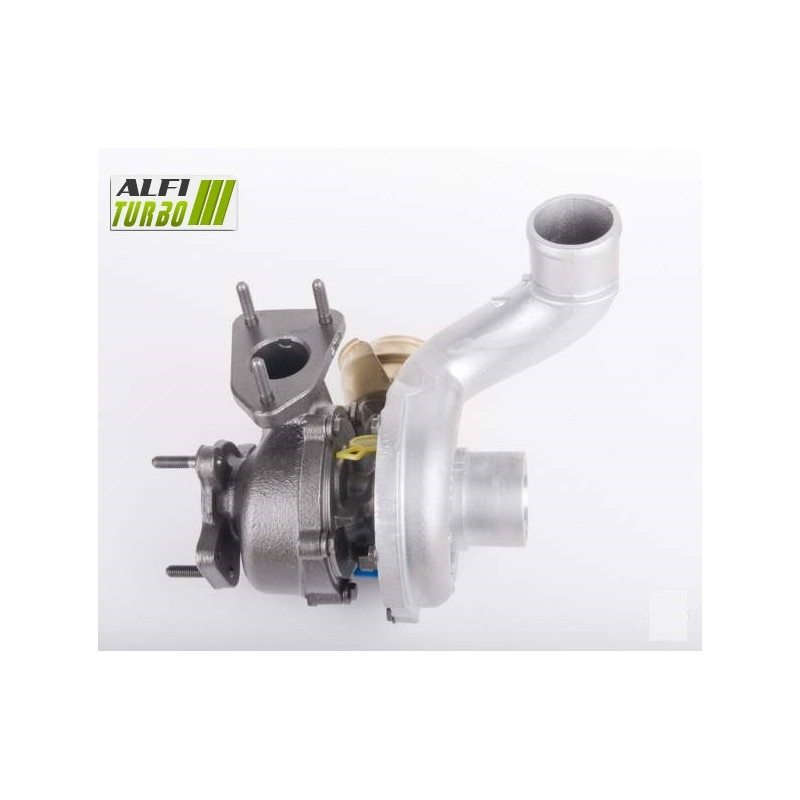
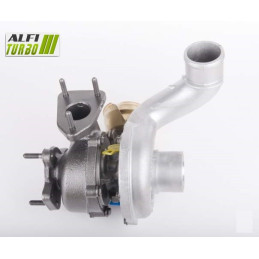
This hybrid turbo for engine 2.2 DCI 150 hp is based on an internal mechanism designed to adjust the compression capacity and flow rate dair. Depending on the course chosen, the student receives a high-flow MFS compressor wheel, a 360° stop and additional modifications to the wheels or casings.
Scheduled for an installation plug & play without any changes d… adaptation; in particular, it concerns several Renault Avantime, Espace The 4, Laguna 2 and Vel Satis went on sale from 2001.
Available products — Stage 1, Stage 2 and Stage 3
Stage 1
Compressor wheel: High-capacity MFS
Stop system: 360° thrust bearing
Balancing: High speed at 150,000 rpm on a Cimat VSR test bench
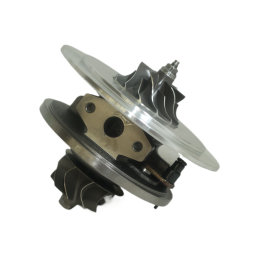
This preparation acts mainly on the compressor side. The high-flow MFS impeller is designed to alter the air’s flow and compression capacity, whilst the 360° thrust bearing distributes the axial forces around the shaft.
Stage 2
Compressor wheel: High-capacity MFS oversized
Carter d’Admission:’ Reprofiled for to receive the new wheel oversized
Stop system: 360° thrust bearing
Balancing: High speed at 150,000 rpm on a Cimat VSR test bench
The Stage 2 incorporates a compressor wheel oversized to a casing d’re-profiled intake’. This modification enables the casing d…to accommodate the new wheel and may alter the flow rate d’air and the compressor’s behaviour depending on the conditions dUse.
Stage 3
Compressor wheel: High-capacity MFS oversized
Carter d’Admission:’ Reprofiled for to receive the new wheel oversized
Stop system: 360° thrust bearing
Turbine wheel: High flow rate oversized
Turbine casing: Reprofiled for to receive the new wheel oversized
Balancing: High speed at 150,000 rpm on a Cimat VSR test bench
This configuration includes documented modifications to the compressor and turbine. Both wheel arches have been reshaped to accommodate the oversized wheels. However, the final performance depends on the overall engine set-up and operating conditions.
What is a hybrid turbo ?
A hybrid turbo retains a suitable turbocharger design for to receive modified internal components. Depending on the course, the preparation may involve the compressor wheel, the turbine wheel, the casings, the thrust bearing system or the balancing of the rotor.
The aim is d’adjust the compression capacity and flow rate’ dair. A hybrid turbocharger is therefore not defined solely by the appearance of its impeller: the geometry of the impellers, their integration with the housings and the overall balance of the unit are all crucial factors.
MFS compressor wheel: standard or Performance ? ?
MFS stands for ‘Milled From Solid’, meaning a wheel machined from a solid block. This manufacturing process does not, on its own, guarantee an increase in throughput dair. A standard MFS wheel can retain a geometry close to its original shape.
In the specifications provided here, the high-flow MFS impeller is described as a forged aluminium impeller, which is lighter, larger and taller than the impeller d’origin’. According to the technical data provided, this offers up to 15 per cent additional compression, to be utilised within the context of d’a consistent engine preparation programme’.
A standard MFS wheel can be just as shiny as an MFS wheel Performance. It is not its appearance that determines its performance, but its geometry and its ability to move more dair.
Why does the geometry of the blades affect the flow rate? d’air ?
The compressor wheel draws in and then compresses the air fed to the engine. Its diameter, profile, height, width and the arrangement of its blades all influence its aerodynamic behaviour. The right geometry can move more dair within certain operating ranges.
The result also depends on the compressor housing, the impeller and the turbine housing, the boost pressure and the engine management system. A larger wheel does not automatically guarantee a better result and may affect the response time as well as the range doptimal use.
Reliability and balancing of the hybrid turbocharger
The 360° bearing stop, which is present in all three documented stages, helps to distribute the axial forces around the axis. It must be operated with adequate lubrication and does not protect the turbocharger against incorrect fitting or a fault doil supply.
The rotor is balanced at high speed, up to 150,000 rpm, on a Cimat VSR test bench. The purpose of this procedure is to minimise vibrations and mechanical stresses when the rotating assembly reaches its operating speed.
Engine remapping and tuning
The engine management system needs to be adjusted for make the most of the hybrid turbo’s features. The wastegate must be adjusted when the ECU is remapped.
Depending on the level of preparation, the fuel injection, exhaust system, cooling system, boost pressure and transmission must also be checked or adjusted. The editing dA hybrid turbo alone does not guarantee an increase in power.
Turbo part numbers
OEM part numbers
7701473437
7701474327
7701475282
7701475285
7701476620
7711134877
8200060089
8200106870
8200139476
8200176856
8200221363
8200221364
8200267138
8200267138A
8200447624
8200447624A
8201124245
Manufacturer’s part numbers
718089-0001
718089-0002
718089-0003
718089-0004
718089-0005
718089-0006
718089-0008
718089-1
718089-2
718089-3
718089-4
718089-5
718089-5008S
718089-6
718089-8
Compatible vehicles and assignments
Renault
Avantime — 2.2 DCI 150 hp
Engine 2.2 DCI — from 2001, end date unspecified
Engine code : not specified
Espace 4 — 2.2 DCI 150 hp
Engine 2.2 DCI — from 2001, end date unspecified
Engine code : not specified
Laguna 2 — 2.2 DCI 150 hp
Engine 2.2 DCI — from 2001, end date unspecified
Engine code : not specified
Vel Satis — 2.2 DCI 150 hp
Engine 2.2 DCI — from 2001, end date unspecified
Engine code : not specified
Additional technical specifications
Product type: Hybrid Turbo
Engine: 2.2 DCI
Power : 150 hp
Period covered: From 2001 onwards
Installation: Plug and play, no modifications required d’adaptation’
Assembly instructions
⚠️ WARNING — IMPORTANT BEFORE ASSEMBLY
Identify and rectify the cause of the previous fault before d’fit the turbo’. Check the lubrication circuit, the supply and the return doil, as well as ensuring that all ducts are clean.
Check the intake and ensure there are no foreign objects. Carry out the priming in accordance with the relevant guidelines and follow the vehicle manufacturer’s instructions.
If a lubrication fault is not rectified, it may lead to the turbocharger failing again.
How do you choose the right turbo ?
Check the reference number engraved or marked on the turbocharger dthe original, then compare it with the OEM and manufacturer’s part numbers listed on this sheet. Also check the make, model, generation and engine type 2.2 DCI, the 150 power hp, theYear installation details and, where available, the engine code.
An identical engine does not always guarantee compatibility between two turbochargers.
⚠️ Check your turbo’s part numbers
Before placing your order, Compare the part number on your turbocharger d’origin’ using the references given in this fact sheet. Having the same motor does not always guarantee compatibility.
If you are in any doubt, please contact our team, quoting your turbo’s full part number d’origin’.